

Gemini, Google’s AI platform, now supports Gmail, and some research suggests that even when emails make it to the Gmail inbox, up to 40% may still be quietly pushed down or deprioritized by Gemini’s filtering skills.
Google made this shift official on January 8, 2026, when it announced that Gmail was entering the Gemini era. This development in Gmail means a clean sender reputation and a passing spam check are no longer enough to guarantee your message gets real attention.
Today, we’ll break down what that announcement actually changed inside the inbox, why those changes are reshaping how Gmail evaluates senders and surfaces messages, and how teams can use tools like Unspam.email to measure what is really happening to their campaigns, not just what the dashboard reports suggest.
After reading this article, you’ll be able to start understanding exactly what Gmail’s AI now controls, and why that changes the deliverability conversation entirely.
What Google’s Gemini Rollout Changed Inside Gmail
On January 8, 2026, Google announced that “Gmail is entering the Gemini era” and for email senders, that announcement marked a genuine platform-level shift, not a minor interface update.
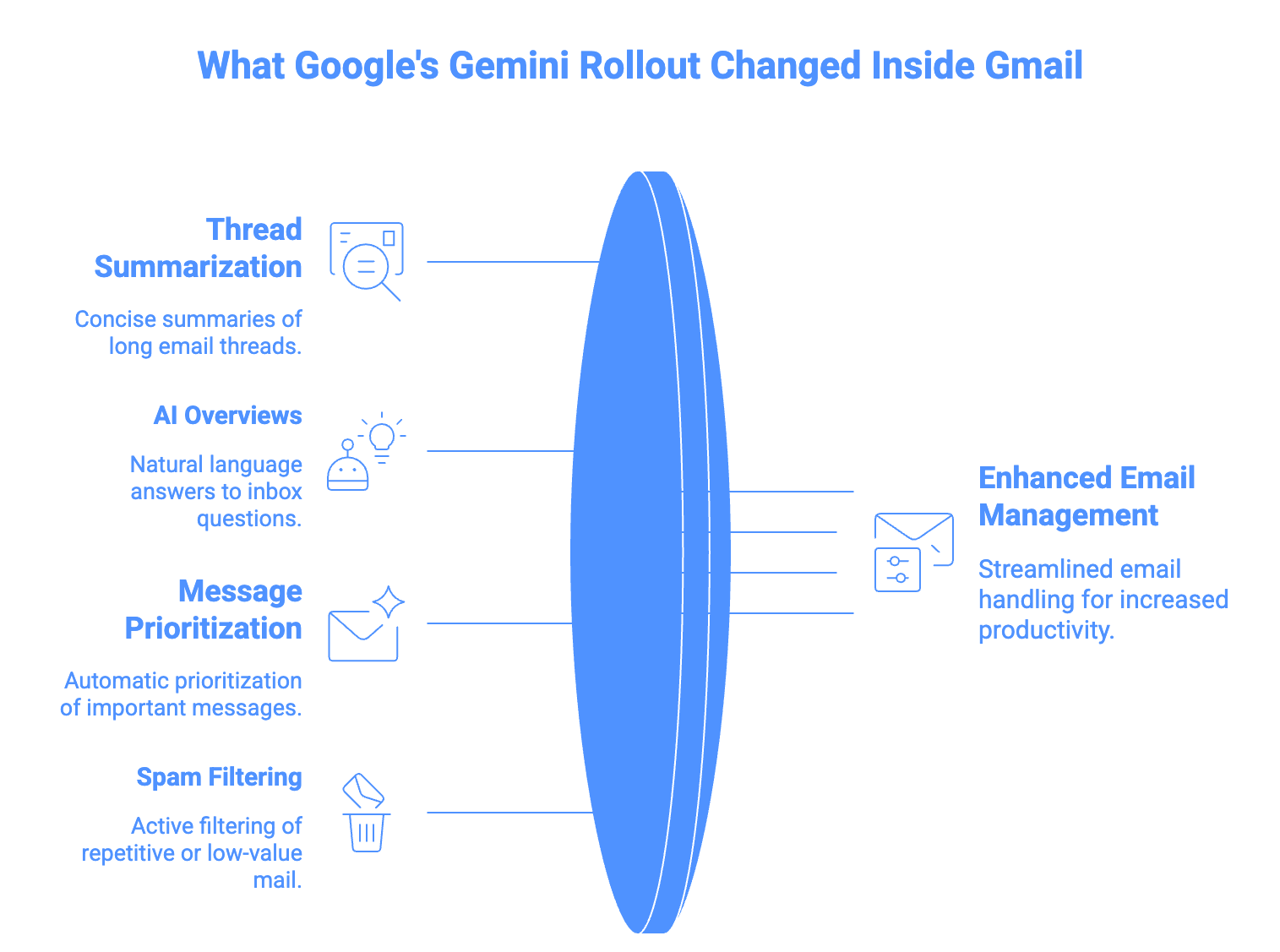
The changes that Google made in Gmail go well beyond spam filtering. Gmail now summarizes long email threads, answers natural language inbox questions through AI Overviews, automatically prioritizes messages from important contacts, and actively filters out what it classifies as repetitive or low-value mail.
The result is an inbox where AI mediates attention before a human ever decides whether to read, click, or reply.
Gmail Now Filters for Visibility, Not Just Deliverability
The most consequential change is…
Read The Full Article at UNSPAM